
Information Technology Average Salaries in Asgabat 2026
How much money does a person working in Information Technology make in Asgabat?
LOW
3,220
TMT AVERAGE
6,370
TMT HIGH
10,100
TMT
A person working in Information Technology in Asgabat typically earns around 6,370 TMT. Salaries range from 3,220 TMT (lowest average) to 10,100 TMT (highest average, actual maximum salary is higher).
Salary Variance
The provided figure represents the median compensation that encompasses housing, transportation, and other perks. The salaries within the Information Technology domain in Asgabat exhibit significant discrepancies across various professions. In case you seek information about the remuneration of a specific position, please refer to the salaries listed below for respective job titles.
Information Technology Jobs Pay Scale and Salaries in Asgabat
Median Salary, maximum and minimum salary, minimum wage, starting salary, and the salary range
Salary Range, Minimum Wage, and Starting Salary
Salaries in Information Technology in Asgabat range from 3,220 TMT (starting average salary) to 10,100 TMT (maximum average salary, actual maximum is higher). To clarify, the number presented is not the legally mandated minimum wage. Rather, it represents the lowest figure reported in a salary survey that involved thousands of participants and professionals from across the entire country.
Median Salary
The median income in the field of Information Technology is 5,660 TMT, implying that half of the workforce in Asgabat earns less than this figure, and the other half earns more. It represents the central value of salaries. As a rule of thumb, you would prefer to be part of the group earning above the median wage, situated on the right-hand side of the salary distribution chart.
Percentiles and Salary Scale
Two values that are highly correlated with the median are the 25th and 75th percentiles. By examining the salary distribution diagram, it is possible to determine that 25% of individuals employed in Information Technology in Asgabat earn less than 4,660 TMT, while 75% of them earn more. Additionally, the diagram reveals that 75% of individuals earn less than 6,470 TMT, while 25% earn more than that.
Pay Scale Structure
Data was regrouped into brackets to provide a better understanding of what salaries can be expected. This approach was deemed more accurate than relying solely on the average salary, as it offers greater insights into the distribution of salaries in the field of Information Technology in Asgabat. The analysis revealed that roughly 65% of all reported salaries fell within the range of 3,620 TMT to 5,080 TMT. Approximately 20% of salaries were below the 3,620 TMT mark, while 10% ranged from 5,080 TMT to 5,740 TMT. Only 5% of individuals earned a gross salary of 5,740 TMT or higher.

Salary Comparison by Years of Experience
How does a person's salary progress over time?
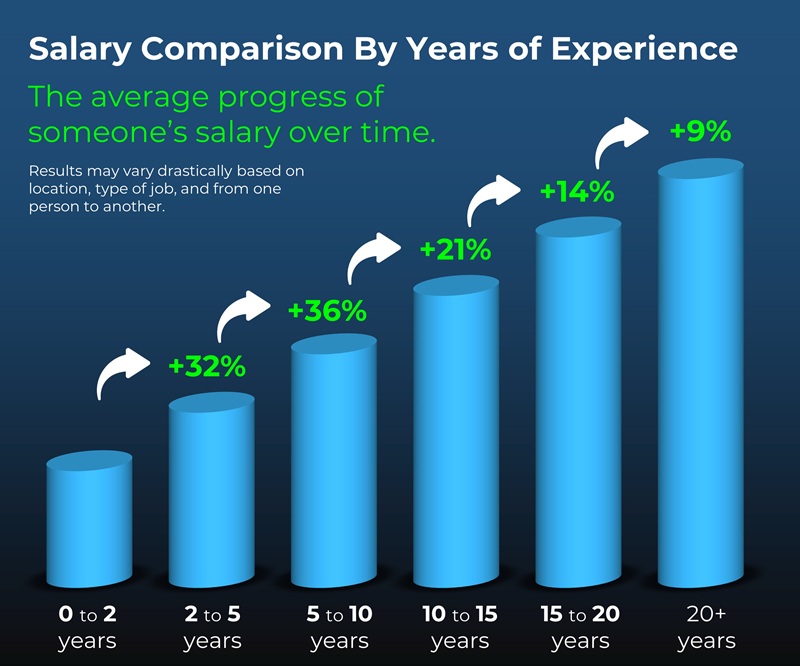
The experience level is the most important factor in determining the salary. Naturally, the more years of experience the higher the wage.
Generally speaking, employees in Information Technology in Asgabat having experience from two to five years earn on average 32% more than freshers and juniors across all industries and disciplines.
Professionals with experience of more than five years tend to earn on average 36% more than those with five years or less of work experience.
As you hit the ten years mark, the salary increases by 21% and an additional 14% for those who have crossed the 15 years mark.
Those figures are presented as guidelines only. The numbers become more significant if you consider one job title at a time.
Salary Comparison By Education
How does the education level affect your salary?
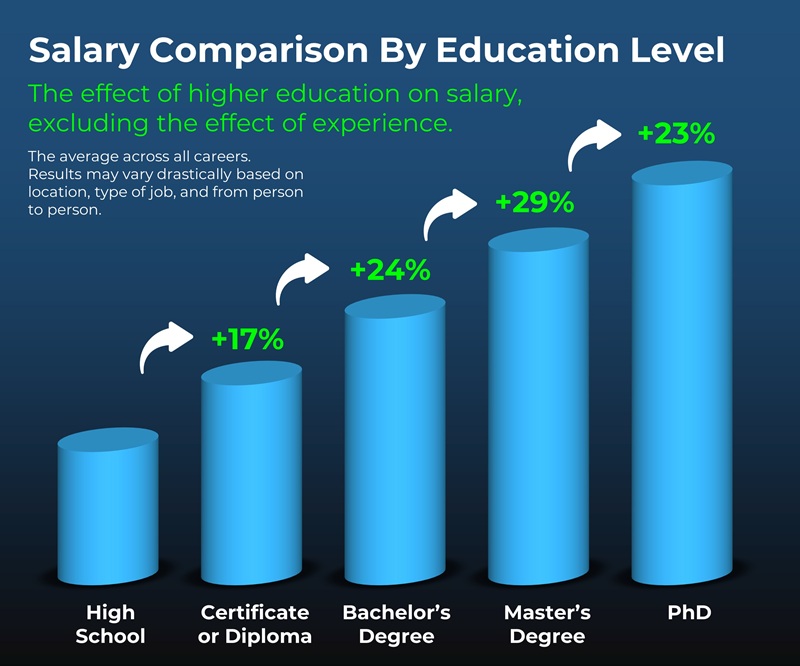
It is well known that higher education equals a bigger salary, but how much more money can a degree add to your income?
We compared the salaries of professionals at the same level but with different college degree levels across many jobs in Information Technology in Asgabat, below are our findings.
Workers with a certificate or diploma earn on average 17% more than their peers who only reached the high school level.
Employees who earned a Bachelor's Degree earn 24% more than those who only managed to attain a certificate or diploma.
Professionals who attained a Master's Degree are awarded salaries that are 29% more than those with a Bachelor's Degree.
Finally, PhD holders earn 23% more than Master's Degree holders on average while doing the same job.
Is a Master's degree or an MBA worth it? Should you pursue higher education?
A Master's degree program or any post-graduate program in Turkmenistan costs anywhere from 26,200 TMT to 78,700 TMT and lasts approximately two years. That is quite an investment.
Employees can't expect any salary increases during the study period, assuming they already have a job. In most cases, a salary review is conducted once education is completed and the degree has been attained.
Many people pursue higher education as a tactic to switch to a higher-paying job. The numbers seem to support this tactic. The average increase in compensation while changing jobs is approximately 10% more than the customary salary increment.
The decision really depends on the situation and experience among many other factors. Putting all variables aside, if a person can afford the costs of higher education then the return on investment is definitely worth it. Degree costs can be recovered roughly in a year or so.
Salary and Compensation Comparison By Gender / Information Technology / Asgabat

Though gender should not have an effect on pay, in reality, it does. So who gets paid more: men or women? In the field of Information Technology in Turkmenistan, the average difference between the salary of male and female employees is .