
Average Salary in Georgia 2026
How much money does a person working in Georgia make?
LOW
1,710
GEL AVERAGE
6,770
GEL HIGH
30,100
GEL
A person working in Georgia typically earns around 6,770 GEL. Salaries range from 1,710 GEL (lowest average) to 30,100 GEL (highest average, actual maximum salary is higher).
Salary Variance
This is the average salary including housing, transport, and other benefits. Salaries in Georgia vary drastically between different careers. If you are interested in the salary of a particular job, see below for salaries for specific job titles.
Pay Scale and Salaries in Georgia
Median Salary, maximum and minimum salary, minimum wage, starting salary, and the salary range
Salary Range, Minimum Wage, and Starting Salary
Salaries in Georgia range from 1,710 GEL (starting salary) to 30,100 GEL (maximum average salary, actual maximum is higher). This is not the minimum wage as per the law, only the lowest reported number in the salary survey that had thousands of participants and professionals from all over the country.
Median Salary
The median salary is 6,190 GEL, which means that 50% of the population in Georgia earns less than that while the other half earns more. The median represents the middle salary value. Generally speaking, you would want to be on the right side of the graph with the group earning more than the median salary.
Percentiles and Salary Scale
Closely related to the median are two values: the 25th and the 75th percentiles. Reading from the salary distribution diagram, 25% of the population in Georgia earn less than 4,470 GEL while 75% of them earn more. Also from the diagram, 75% of the population earn less than 9,380 GEL while 25% earn more than that.
Pay Scale Structure
We grouped the most common and recurring salaries into brackets to give more insight into what salary to expect. This method is more accurate than just the average salary and gives more insights into how salaries are actually distributed in Georgia. Around 65% of all reported figures are in the range 4,100 GEL to 10,500 GEL. Approximately 20% fall under the 4,100 GEL cap. Ten percent of wages are from 10,500 GEL to 13,500 GEL. Only 5% of people grossed 13,500 GEL or more.

Salary Comparison by Years of Experience
How does a person's salary progress over time?
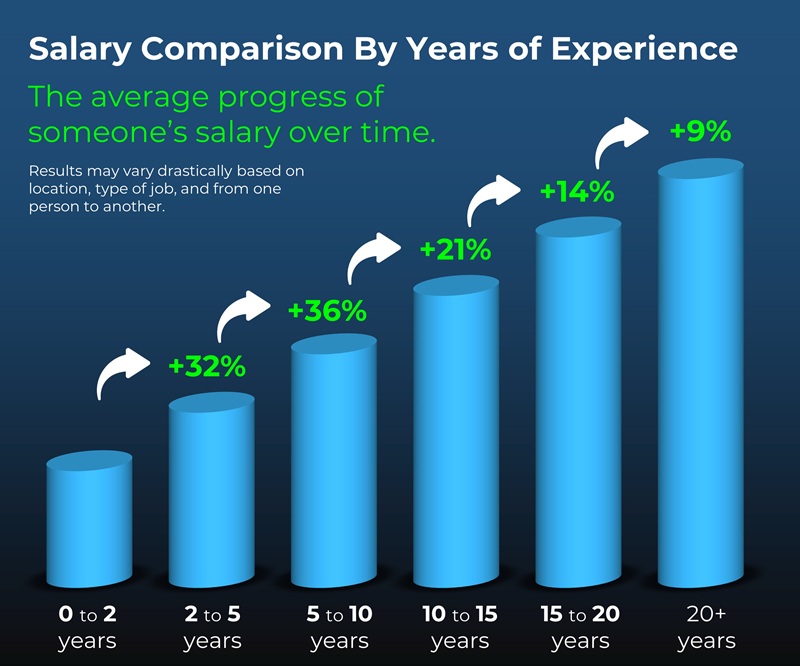
Salary is primarily determined by the level of experience one possesses, with higher levels of experience resulting in higher wages.
In Georgia, employees with two to five years of experience typically earn an average of 32% more than entry-level and junior workers in all industries and fields.
Individuals with more than five years of experience tend to earn an average of 36% more than those with less than five years of experience.
After ten years of work, salaries increase by 21%, with an additional 14% increase for those who have worked for over 15 years.
These figures should be used as rough estimates, as considering individual job titles can lead to more accurate assessments.
Salary Comparison By Education
How does the education level affect your salary?
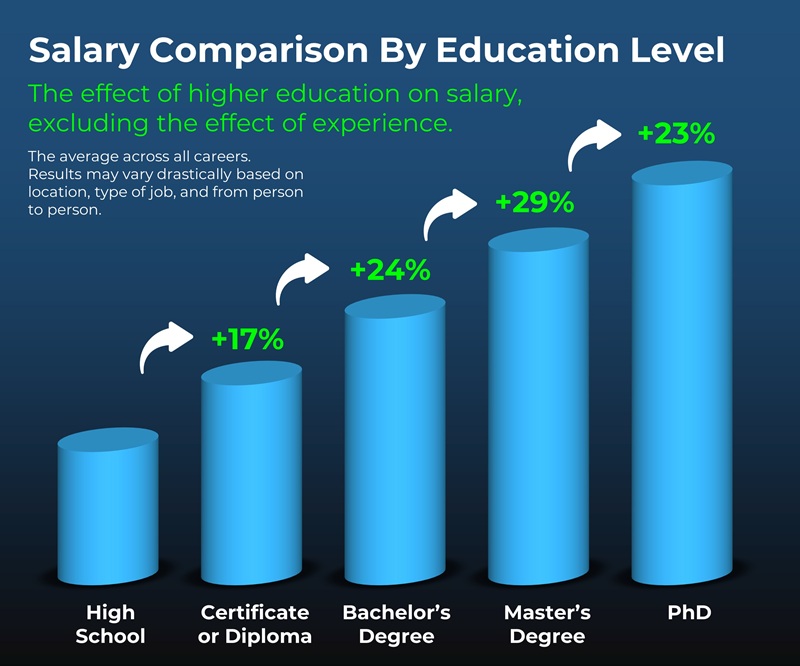
The correlation between higher education and higher salary is widely acknowledged, but how much of an income increase can one expect from obtaining a degree?
We conducted a study in Georgia comparing the salaries of professionals with different levels of college degrees who held similar positions in various industries.
Our results showed that individuals with a certificate or diploma earned an average of 17% more than those who only completed high school.
Those who obtained a Bachelor's Degree earned 24% more than their counterparts with a certificate or diploma.
Professionals with a Master's Degree earned 29% more than those with a Bachelor's Degree.
Finally, those who held a PhD earned an average of 23% more than those with a Master's Degree while performing the same job.
Is investing in a Master's degree or an MBA worth it? Is pursuing higher education worth the investment?
Earning a Master's degree or any post-graduate qualification in Georgia is a substantial financial commitment, with tuition fees ranging from 33,900 GEL to 102,000 GEL and a duration of around two years. It's important to note that during this period, any salary increases are unlikely, assuming ongoing employment. Salary reviews are typically conducted after completing the program and obtaining the degree.
Many individuals pursue advanced education as a means of transitioning to higher-paying positions, and the statistics indicate that this is an effective strategy. On average, individuals who change jobs after earning a higher degree receive a salary increase of about 10% more than the typical annual raise.
Ultimately, deciding whether or not to pursue advanced education depends on a variety of factors, including the personal situation and experience. However, if one can afford the financial costs of obtaining a higher degree, the return on investment is likely to be worthwhile, with the ability to recoup the costs in approximately a year.