
Architect Average Salary in Iran 2026
How much money does a person working as Architect make in Iran?
LOW
28M
IRR AVERAGE
57M
IRR HIGH
89M
IRR
A person working as Architect in Iran typically earns around 57M IRR. Salaries range from 28M IRR (lowest) to 89M IRR (highest).
Salary Variance
This is the average salary including housing, transport, and other benefits. Architect salaries in Iran vary drastically based on experience, skills, gender, or location. Below you will find a detailed breakdown based on many different criteria.
Architect Pay Scale and Salaries in Iran
Median Salary, maximum and minimum salary, minimum wage, starting salary, and the salary range
Salary Range, Minimum Wage, and Starting Salary
Salaries for the position Architect in Iran range from 28M IRR (starting salary) to 89M IRR (maximum salary). It should be noted that the given figure is not the legally mandated minimum wage; rather, it represents the lowest figure reported in a salary survey that included thousands of participants and professionals from all regions of the country.
Median Salary
With a median salary of 53M IRR, half of the professionals who work as Architect in Iran earn less than this amount, and the other half earn more. The median salary denotes the middle value of salaries. Ideally, you would want to belong to the group earning more than the median salary, located on the right side of the salary distribution graph.
Percentiles and Salary Scale
The median is closely associated with two other values known as the 25th and 75th percentiles. By examining the salary distribution chart, it can be determined that 25% of professionals employed as Architect in Iran earn less than 44M IRR, while 75% earn more. Similarly, the chart shows that 75% earn less than 61M IRR while 25% earn more.
Pay Scale Structure
To provide a better understanding of expected salaries, we categorized the frequently occurring salaries into different ranges. This approach provides a more precise representation of salary distribution for the job title Architect in Iran compared to simply calculating the average. The majority of reported salaries, approximately 65%, fall within the range of 33M IRR to 47M IRR. About 20% of salaries are below the 33M IRR mark, while 10% fall within the range of 47M IRR to 53M IRR. Only 5% of individuals have salaries exceeding 53M IRR.

Salary Comparison by Years of Experience / Architect / Iran
How do experience and age affect pay?
| 0 - 2 Years | 33M IRR | |
| 2 - 5 Years | +29% | 43M IRR |
| 5 - 10 Years | +38% | 59M IRR |
| 10 - 15 Years | +24% | 73M IRR |
| 15 - 20 Years | +7% | 78M IRR |
| 20+ Years | +7% | 84M IRR |
The experience level is the most important factor in determining the salary. Naturally, the more years of experience the higher the wage. We broke down salaries by experience level for people working as Architect and this is what we found.
Employees with less than two years of experience earn approximately 33M IRR.
While someone with an experience level between two and five years is expected to earn 43M IRR, 29% more than someone with less than two year's experience.
Moving forward, an experience level between five and ten years lands a salary of 59M IRR, 38% more than someone with two to five years of experience.
Additionally, professionals whose expertise span anywhere between ten and fifteen years get a salary equivalent to 73M IRR, 24% more than someone with five to ten years of experience.
If the experience level is between fifteen and twenty years, then the expected wage is 78M IRR, 7% more than someone with ten to fifteen years of experience.
Lastly, employees with more than twenty years of professional experience get a salary of 84M IRR, 7% more than people with fifteen to twenty years of experience.
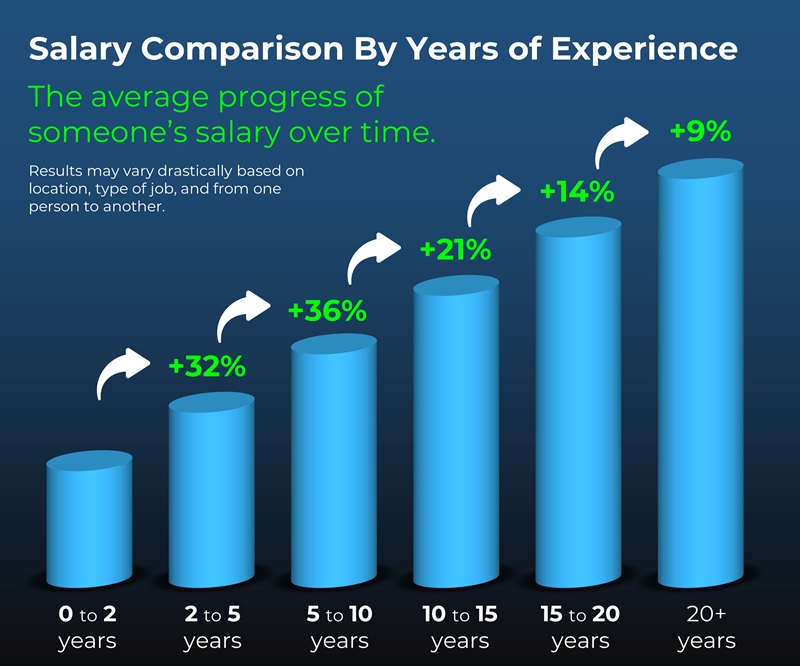
Typical Salary Progress for Most Careers
Salary Comparison By Education / Architect / Iran
How do education levels affect salaries?
Displayed below is the average salary variance between different education levels of professionals working as Architect.
| Bachelor's Degree | 42M IRR | |
| Master's Degree | +60% | 67M IRR |
We all know that higher education equals a bigger salary, but how much more money can a degree add to your income? We broke down salaries by education level for the position Architect in order to make a comparison.
Level 1: Bachelor's Degree
Employees at this education level have an average salary of 42M IRR.
Level 2: Master's Degree
At this level, the average salary becomes 67M IRR, 60% more than the previous level.
Is a Master's degree or an MBA worth it? Should you pursue higher education?
A Master's degree program or any post-graduate program in Iran costs anywhere from 225M IRR to 674M IRR and lasts approximately two years. That is quite an investment.
You can't really expect any salary increases during the study period, assuming you already have a job. In most cases, a salary review is conducted once education is completed and the degree has been attained.
Many people pursue higher education as a tactic to switch to a higher-paying job. The numbers seem to support the theory. The average increase in compensation while changing jobs is approximately 10% more than the customary salary increment.
If you can afford the costs of higher education, the return on investment is definitely worth it. You should be able to recover the costs in roughly a year or so.
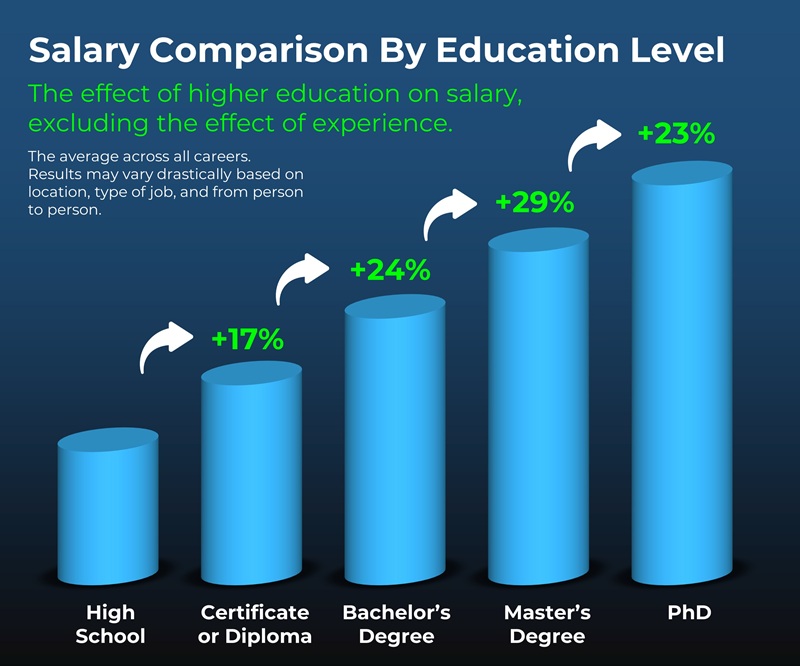
Typical Salary Difference by Education for Most Careers
Salary and Compensation Comparison By Gender / Architect / Iran

Though gender should not have an effect on pay, in reality, it does. So who gets paid more: men or women? For the people who work as Architect in Iran, the average difference between the salary of male and female employees is 11%.
| Male | 60M IRR | |
| Female | -10% | 54M IRR |
Average Annual Salary Increment Percentage / Architect / Iran
How much are annual salary increments in Iran for individuals working as Architect? How often do employees get salary raises?
Individuals working as Architect in Iran are likely to observe a salary increase of approximately 11% every 20 months. The national average annual increment for all professions combined is 8% granted to employees every 19 months.

The term Annual Salary Increase usually refers to the increase in 12 calendar month period, but because it is rare that people get their salaries reviewed exactly on the one-year mark, it is more meaningful to know the frequency and the rate at the time of the increase.
How to calculate the salary increment percentage?
The annual salary Increase in a calendar year (12 months) can be easily calculated as follows: Annual Salary Increase = Increase Rate x 12 / Increase Frequency
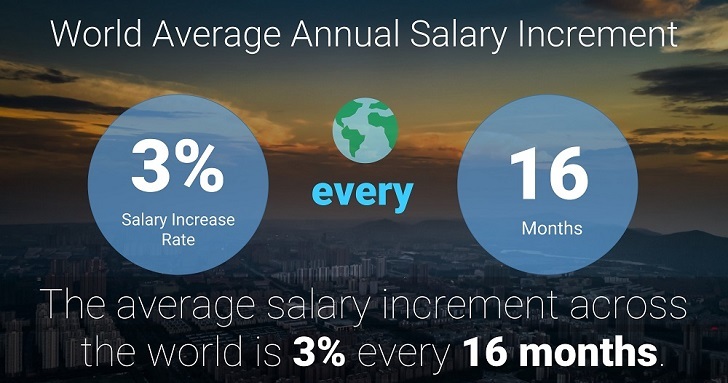
Worldwide Salary Raises: All Countries and All Jobs
Salary Packages and Schemes
Not all compensation increases are reflected directly in the salary. Some companies offer upgraded packages to their staff instead of cash money. The figures displayed here account only for direct increments to the base salary.
Bonus and Incentive Rates / Architect / Iran
How much and how often are bonuses being awarded?
22% of surveyed staff reported that they haven't received any bonuses or incentives in the previous year while 78% said that they received at least one form of monetary bonus.
Those who got bonuses reported rates ranging from 5% to 9% of their annual salary.
| Received Bonus | 78% | |
| No Bonus | 22% |
Types of Bonuses Considered
Individual Performance-Based BonusesThe most standard form of bonus, where the employee is awarded based on their exceptional performance.
Company Performance BonusesOccasionally, some companies like to celebrate excess earnings and profits with their staff collectively in the form of bonuses that are granted to everyone. The amount of the bonus will probably be different from person to person depending on their role within the organization.
Goal-Based BonusesGranted upon achieving an important goal or milestone.
Holiday / End of Year BonusesThese types of bonuses are given without a reason and usually resemble an appreciation token.
Bonuses Are Not Commissions!
People tend to confuse bonuses with commissions. A commission is a prefixed rate at which someone gets paid for items sold or deals completed while a bonus is in most cases arbitrary and unplanned.
What makes a position worthy of good bonuses and a high salary?
The main two types of jobs | |
| Revenue Generators | Supporting Cast |
Employees that are directly involved in generating revenue or profit for the organization. Their field of expertise usually matches the type of business. | Employees that support and facilitate the work of revenue generators. Their expertise is usually different from that of the core business operations. |
Example: | Example: |
Revenue generators usually get more and higher bonuses, higher salaries, and more frequent salary increments. The reason is quite simple: it is easier to quantify your value to the company in monetary terms when you participate in revenue generation.
Bonus Comparison by Seniority Level
Top management personnel and senior employees naturally exhibit higher bonus rates and frequencies than juniors. This is very predictable due to the inherent responsibilities of being higher in the hierarchy. People in top positions can easily get double or triple bonus rates than employees down the pyramid.
Average Hourly Wage / Architect / Iran
The average hourly wage (pay per hour) for individuals working as Architect in Iran is 330,000 IRR.This is the rate they get paid for every worked hour.
About The Hourly Pay Rate
The hourly wage is the salary paid in one worked hour. Usually, jobs are classified into two categories: salaried jobs and hourly jobs. Salaried jobs pay a fixed amount regardless of the hours worked. Hourly jobs pay per worked hour. To convert salary into hourly wage the above formula is used (assuming 5 working days in a week and 8 working hours per day which is the standard for most jobs). The hourly wage calculation may differ slightly depending on the worked hours per week and the annual vacation allowance. The figures mentioned above are good approximations and are considered to be the standard. One major difference between salaried employees and hourly paid employees is overtime eligibility. Salaried employees are usually exempt from overtime as opposed to hourly paid staff.
What is the minimum hourly rate of pay?
The minimum pay rate per hour for people working as Architect in Iran is 162,000 IRR. This is the minimum as per the gathered data in the salary survey not the minimum hourly rate mandated by law.
Salary comparison with similar jobs
| Job Title | Average Salary |
| Architecture | ||
| 3D Printing Architect | 48M IRR |  -100% |
| Active Travel Planner | 43M IRR | -100% |
| Adaptive Reuse Architect | 50M IRR | -100% |
| Architect | 57M IRR |  +100% |
| Architectural Designer | 55M IRR | -100% |
| Architectural Drafter | 23M IRR | -100% |
| Architectural Manager | 86M IRR | +100% |
| Architectural Technician | 31M IRR | -100% |
| Architectural Technologist | 30M IRR | -100% |
| Architecture Consultant | 81M IRR | +100% |
| Architecture Estimating Manager | 65M IRR | +100% |
| Architecture Specifications Writer | 21M IRR | -100% |
| Assistant Architectural Manager | 79M IRR | +100% |
| Biophilic Design Consultant | 53M IRR | -100% |
| Building Performance Analyst | 56M IRR | -100% |
| CAD Drafter | 25M IRR | -100% |
| CAD Manager | 51M IRR | -100% |
| Computational Designer | 49M IRR | -100% |
| Conservation Architect | 52M IRR | -100% |
| Design and Decoration Assistant | 25M IRR | -100% |
| Design Manager | 76M IRR | +100% |
| Digital Design Strategist | 53M IRR | -100% |
| Digital Fabrication Specialist | 49M IRR | -100% |
| Drafter | 22M IRR | -100% |
| Drafting Supervisor | 42M IRR | -100% |
| Facilities and Project Manager | 80M IRR | +100% |
| Facility Planner | 44M IRR | -100% |
| Furniture Designer | 48M IRR | -100% |
| Heritage Conservation Specialist | 37M IRR | -100% |
| Interior Architect | 46M IRR | -100% |
| Interior Decorator | 43M IRR | -100% |
| Interior Design Assistant | 20M IRR | -100% |
| Interior Designer | 48M IRR | -100% |
| Kitchen Designer | 28M IRR | -100% |
| Landscape Architect | 68M IRR | +100% |
| Landscape Artist | 38M IRR | -100% |
| Landscaper | 33M IRR | -100% |
| Lighting Designer | 41M IRR | -100% |
| Mapping Technician | 20M IRR | -100% |
| Mechanical Drafter | 28M IRR | -100% |
| Parametric Modeler | 44M IRR | -100% |
| Photogrammetrist | 24M IRR | -100% |
| Resilient Design Expert | 52M IRR | -100% |
| Smart City Planner | 58M IRR | +100% |
| Sustainability Architect | 59M IRR | +100% |
| Urban Data Analyst | 53M IRR | -100% |
| Urban Mobility Specialist | 50M IRR | -100% |
| Urban Planner | 55M IRR | -100% |

Government vs Private Sector Salary Comparison
Where can you get paid more, working in a private company or the government? The difference between the public or government sector salaries and the private sector salaries in Iran is 10% on average across all career fields.
| Private Sector | 43M IRR | |
| Public Sector | +10% | 48M IRR |
Salary Statistics and Calculation Guide
What is considered to be a good and competitive salary for the job title Architect in Iran?
A good and competitive compensation would range anywhere between 53M IRR and 61M IRR. This is a very rough estimate. Experience and education play a very huge part in the final earnings.
Gross Salary (before tax) and Net Salary (after tax)
All salary and compensation figures displayed here are gross salary figures, that is the salary before tax deductions. Because taxes may differ across sectors and locations, it is difficult to accurately calculate the net salary after tax for every career.
Base / Basic Salary
The base salary for a careers like Architect in Iran ranges from 28M IRR to 44M IRR. The base salary depends on many factors including experience and education. It is not easy to provide a figure with very little information, so take this range with a grain of salt.
What is the difference between the median and the average salary?
Both are indicators. If your salary is higher than both the average and the median then you are doing very well. If your salary is lower than both, then many people earn more than you and there is plenty of room for improvement. If your wage is between the average and the median, then things can be a bit complicated. We wrote a guide to explain all about the different scenarios.