
Pharmaceutical and Biotechnology Average Salaries in Oklahoma 2026
How much money does a person working in Pharmaceutical and Biotechnology make in Oklahoma?
LOW
61,800
USD AVERAGE
123,000
USD HIGH
220,000
USD
A person working in Pharmaceutical and Biotechnology in Oklahoma typically earns around 123,000 USD. Salaries range from 61,800 USD (lowest average) to 220,000 USD (highest average, actual maximum salary is higher).
Salary Variance
The provided figure represents the median compensation that encompasses housing, transportation, and other perks. The salaries within the Pharmaceutical and Biotechnology domain in Oklahoma exhibit significant discrepancies across various professions. In case you seek information about the remuneration of a specific position, please refer to the salaries listed below for respective job titles.
Salaries for specific jobs
| Job Title | Average Salary |
| Pharmaceutical and Biotechnology | |
| Assistant Pharmacist | 81,000 USD |
| Assistant Pharmacy Director | 150,000 USD |
| Associate Medical Affairs Director | 213,000 USD |
| Bioethics Specialist | 117,000 USD |
| Biofabrication Specialist | 120,000 USD |
| Bioinformatics Scientist | 178,000 USD |
| Bioinformatics Technician | 82,500 USD |
| Biological Scientist | 193,000 USD |
| Biological Technician | 83,000 USD |
| Biomanufacturing Technician | 103,000 USD |
| Biomarker Scientist | 141,000 USD |
| Biomedical Electronics Technician | 81,700 USD |
| Biomedical Engineer | 81,300 USD |
| Biomedical Engineering Director | 158,000 USD |
| Bioprocess Engineer | 101,000 USD |
| Biostatistician | 128,000 USD |
| Biotechnologist | 125,000 USD |
| Biotechnology Lead Data Manager | 96,400 USD |
| Cell Therapy Scientist | 180,000 USD |
| Chemical Process Technician | 92,700 USD |
| Clinical Consultant | 128,000 USD |
| Clinical Data Manager | 125,000 USD |
| Clinical Data Specialist | 115,000 USD |
| Clinical Informatics Specialist | 93,000 USD |
| Clinical Operations Manager | 180,000 USD |
| Clinical Pharmacist | 124,000 USD |
| Clinical Pharmacy Specialist | 146,000 USD |
| Clinical Programmer | 65,100 USD |
| Clinical Project Manager | 115,000 USD |
| Clinical Research Associate | 110,000 USD |
| Clinical Research Manager | 181,000 USD |
| Clinical Study Manager | 158,000 USD |
| Clinical Trials Compliance Officer | 210,000 USD |
| Compliance Specialist | 129,000 USD |
| Computational Chemist | 152,000 USD |
| Cytology Laboratory Technologist | 97,100 USD |
| Cytotechnologist | 97,400 USD |
| Digital Biomarker Developer | 124,000 USD |
| Digital Health Specialist | 115,000 USD |
| Drug Safety Specialist | 132,000 USD |
| GCP Auditor | 113,000 USD |
| Gene Editing Compliance Officer | 160,000 USD |
| Gene Editing Specialist | 129,000 USD |
| Gene Therapy Researcher | 137,000 USD |
| Hospital Pharmacy Technician | 91,000 USD |
| Manufacturing Engineer | 107,000 USD |
| Medical 3D Printing Specialist | 102,000 USD |
| Medical Affairs Director | 188,000 USD |
| Medical Device Compliance Specialist | 122,000 USD |
| Medical Device Data Analyst | 117,000 USD |
| Medical Device Designer | 114,000 USD |
| Medical Representative | 81,100 USD |
| Medical Science Liaison | 137,000 USD |
| Medical Technology Writer | 93,200 USD |
| Molecular and Cellular Biologist | 210,000 USD |
| Nuclear Pharmacist | 131,000 USD |
| Pharmaceutical Compliance Auditor | 168,000 USD |
| Pharmaceutical Manager | 219,000 USD |
| Pharmaceutical Manufacturing Lead | 231,000 USD |
| Pharmaceutical Operations Excellence Manager | 211,000 USD |
| Pharmaceutical Process Engineer | 117,000 USD |
| Pharmaceutical Production Assistant Manager | 136,000 USD |
| Pharmaceutical Project Manager | 134,000 USD |
| Pharmaceutical Quality Auditor | 135,000 USD |
| Pharmaceutical Regulatory Affairs Assistant | 101,000 USD |
| Pharmaceutical Regulatory Affairs Manager | 139,000 USD |
| Pharmaceutical Regulatory Affairs Specialist | 106,000 USD |
| Pharmaceutical Representative | 82,400 USD |
| Pharmaceutical Research Associate | 125,000 USD |
| Pharmaceutical Research Scientist | 194,000 USD |
| Pharmaceutical Researcher | 186,000 USD |
| Pharmaceutical Sales and Marketing Manager | 153,000 USD |
| Pharmaceutical Sales Manager | 175,000 USD |
| Pharmaceutical Sales Representative | 86,800 USD |
| Pharmaceutical Supply Chain Manager | 187,000 USD |
| Pharmaceutical Team Leader | 131,000 USD |
| Pharmaceutical Technologist | 93,300 USD |
| Pharmacist | 126,000 USD |
| Pharmacogenomics Expert | 137,000 USD |
| Pharmacovigilance Analyst | 135,000 USD |
| Pharmacy Aide | 82,000 USD |
| Pharmacy Manager | 178,000 USD |
| Pharmacy Stock Controller | 72,800 USD |
| Pharmacy Technician | 71,900 USD |
| Precision Medicine Compliance Analyst | 139,000 USD |
| Precision Medicine Specialist | 131,000 USD |
| Records Management Coordinator | 68,400 USD |
| Shift Encapsulator | 70,800 USD |
| Staff Pharmacist | 120,000 USD |
| Synthetic Biologist | 154,000 USD |
| Telepharmacy Technician | 73,200 USD |

Pharmaceutical and Biotechnology Jobs Pay Scale and Salaries in Oklahoma
Median Salary, maximum and minimum salary, minimum wage, starting salary, and the salary range
Salary Range, Minimum Wage, and Starting Salary
Salaries in Pharmaceutical and Biotechnology in Oklahoma range from 61,800 USD (starting average salary) to 220,000 USD (maximum average salary, actual maximum is higher). To clarify, the number presented is not the legally mandated minimum wage. Rather, it represents the lowest figure reported in a salary survey that involved thousands of participants and professionals from across the entire country.
Median Salary
The median income in the field of Pharmaceutical and Biotechnology is 111,000 USD, implying that half of the workforce in Oklahoma earns less than this figure, and the other half earns more. It represents the central value of salaries. As a rule of thumb, you would prefer to be part of the group earning above the median wage, situated on the right-hand side of the salary distribution chart.
Percentiles and Salary Scale
Two values that are highly correlated with the median are the 25th and 75th percentiles. By examining the salary distribution diagram, it is possible to determine that 25% of individuals employed in Pharmaceutical and Biotechnology in Oklahoma earn less than 91,000 USD, while 75% of them earn more. Additionally, the diagram reveals that 75% of individuals earn less than 129,000 USD, while 25% earn more than that.
Pay Scale Structure
Data was regrouped into brackets to provide a better understanding of what salaries can be expected. This approach was deemed more accurate than relying solely on the average salary, as it offers greater insights into the distribution of salaries in the field of Pharmaceutical and Biotechnology in Oklahoma. The analysis revealed that roughly 65% of all reported salaries fell within the range of 72,100 USD to 106,000 USD. Approximately 20% of salaries were below the 72,100 USD mark, while 10% ranged from 106,000 USD to 121,000 USD. Only 5% of individuals earned a gross salary of 121,000 USD or higher.

Salary Comparison by Years of Experience
How does a person's salary progress over time?
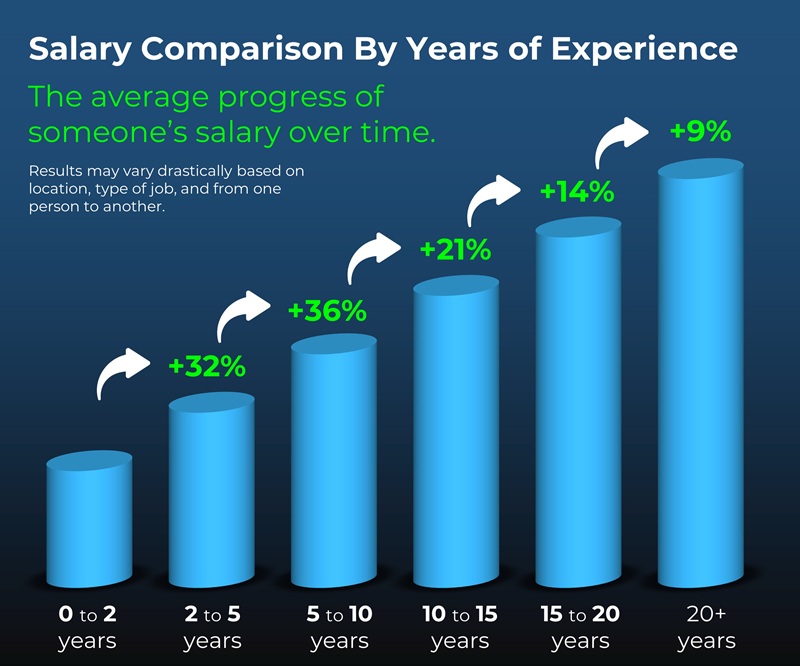
The experience level is the most important factor in determining the salary. Naturally, the more years of experience the higher the wage.
Generally speaking, employees in Pharmaceutical and Biotechnology in Oklahoma having experience from two to five years earn on average 32% more than freshers and juniors across all industries and disciplines.
Professionals with experience of more than five years tend to earn on average 36% more than those with five years or less of work experience.
As you hit the ten years mark, the salary increases by 21% and an additional 14% for those who have crossed the 15 years mark.
Those figures are presented as guidelines only. The numbers become more significant if you consider one job title at a time.
Salary Comparison By Education
How does the education level affect your salary?
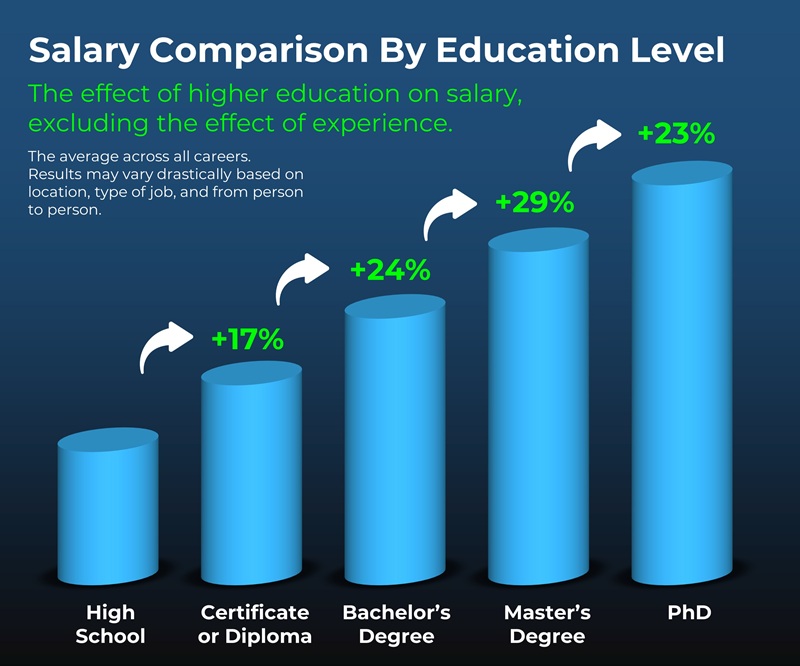
It is well known that higher education equals a bigger salary, but how much more money can a degree add to your income?
We compared the salaries of professionals at the same level but with different college degree levels across many jobs in Pharmaceutical and Biotechnology in Oklahoma, below are our findings.
Workers with a certificate or diploma earn on average 17% more than their peers who only reached the high school level.
Employees who earned a Bachelor's Degree earn 24% more than those who only managed to attain a certificate or diploma.
Professionals who attained a Master's Degree are awarded salaries that are 29% more than those with a Bachelor's Degree.
Finally, PhD holders earn 23% more than Master's Degree holders on average while doing the same job.
Is a Master's degree or an MBA worth it? Should you pursue higher education?
A Master's degree program or any post-graduate program in United States costs anywhere from 39,600 USD to 119,000 USD and lasts approximately two years. That is quite an investment.
Employees can't expect any salary increases during the study period, assuming they already have a job. In most cases, a salary review is conducted once education is completed and the degree has been attained.
Many people pursue higher education as a tactic to switch to a higher-paying job. The numbers seem to support this tactic. The average increase in compensation while changing jobs is approximately 10% more than the customary salary increment.
The decision really depends on the situation and experience among many other factors. Putting all variables aside, if a person can afford the costs of higher education then the return on investment is definitely worth it. Degree costs can be recovered roughly in a year or so.
Salary and Compensation Comparison By Gender / Pharmaceutical and Biotechnology / Oklahoma

Though gender should not have an effect on pay, in reality, it does. So who gets paid more: men or women? In the field of Pharmaceutical and Biotechnology in United States, the average difference between the salary of male and female employees is 6%.
| Male | 130,000 USD | |
| Female | -5% | 123,000 USD |
Average Annual Salary Increment Percentage / Pharmaceutical and Biotechnology / Oklahoma
How much are annual salary increments in Oklahoma for individuals working in Pharmaceutical and Biotechnology? How often do employees get salary raises?
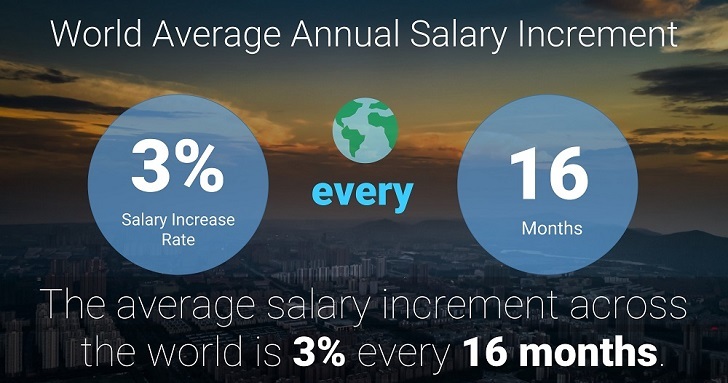
Professionals working in Pharmaceutical and Biotechnology in United States are likely to observe a salary increase of approximately 9% every 15 months. The national average annual increment for all professions combined is 8% granted to employees every 16 months.

The term Annual Salary Increase usually refers to the increase in 12 calendar month period, but because it is rare that people get their salaries reviewed exactly on the one-year mark, it is more meaningful to know the frequency and the rate at the time of the increase.
How to calculate the salary increment percentage?
The annual salary Increase in a calendar year (12 months) can be easily calculated as follows: Annual Salary Increase = Increase Rate x 12 / Increase Frequency
Worldwide Salary Raises: All Countries and All Jobs
Salary Packages and Schemes
Not all compensation increases are reflected directly in the salary. Some companies offer upgraded packages to their staff instead of cash money. The figures displayed here account only for direct increments to the base salary.
Bonus and Incentive Rates / Pharmaceutical and Biotechnology / United States
How much and how often are bonuses being awarded?
49% of surveyed staff in Pharmaceutical and Biotechnology reported that they haven't received any bonuses or incentives in the previous year while 51% said that they received at least one form of monetary bonus.
Those who got bonuses reported rates ranging from 3% to 5% of their annual salary.
| Received Bonus | 51% | |
| No Bonus | 49% |
Types of Bonuses Considered
Individual Performance-Based BonusesThe most standard form of bonus, where the employee is awarded based on their exceptional performance.
Company Performance BonusesOccasionally, some companies like to celebrate excess earnings and profits with their staff collectively in the form of bonuses that are granted to everyone. The amount of the bonus will probably be different from person to person depending on their role within the organization.
Goal-Based BonusesGranted upon achieving an important goal or milestone.
Holiday / End of Year BonusesThese types of bonuses are given without a reason and usually resemble an appreciation token.
Bonuses Are Not Commissions!
People tend to confuse bonuses with commissions. A commission is a prefixed rate at which someone gets paid for items sold or deals completed while a bonus is in most cases arbitrary and unplanned.
What makes a position worthy of good bonuses and a high salary?
The main two types of jobs | |
| Revenue Generators | Supporting Cast |
Employees that are directly involved in generating revenue or profit for the organization. Their field of expertise usually matches the type of business. | Employees that support and facilitate the work of revenue generators. Their expertise is usually different from that of the core business operations. |
Example: | Example: |
Revenue generators usually get more and higher bonuses, higher salaries, and more frequent salary increments. The reason is quite simple: it is easier to quantify your value to the company in monetary terms when you participate in revenue generation.
Bonus Comparison by Seniority Level
Top management personnel and senior employees naturally exhibit higher bonus rates and frequencies than juniors. This is very predictable due to the inherent responsibilities of being higher in the hierarchy. People in top positions can easily get double or triple bonus rates than employees down the pyramid.
Hourly Average Wage / Pharmaceutical and Biotechnology / Oklahoma
The average hourly wage (pay per hour) in Pharmaceutical and Biotechnology in Oklahoma is 59 USD.This is the rate they get paid for every worked hour.
About The Hourly Pay Rate
The hourly wage is the salary paid in one worked hour. Usually, jobs are classified into two categories: salaried jobs and hourly jobs. Salaried jobs pay a fixed amount regardless of the hours worked. Hourly jobs pay per worked hour. To convert salary into hourly wage the above formula is used (assuming 5 working days in a week and 8 working hours per day which is the standard for most jobs). The hourly wage calculation may differ slightly depending on the worked hours per week and the annual vacation allowance. The figures mentioned above are good approximations and are considered to be the standard. One major difference between salaried employees and hourly paid employees is overtime eligibility. Salaried employees are usually exempt from overtime as opposed to hourly paid staff.
What is the minimum hourly rate of pay?
The minimum pay rate per hour for people working in Pharmaceutical and Biotechnology in Oklahoma is 30 USD. This is the minimum as per the gathered data in the salary survey not the minimum hourly rate mandated by law.
Government vs Private Sector Salary Comparison
Where can you get paid more, working in a private company or the government? The difference between the public or government sector salaries and the private sector salaries in United States is 5% on average across all career fields.
| Private Sector | 92,800 USD | |
| Public Sector | +5% | 97,500 USD |
Salary Statistics and Calculation Guide
What is considered to be a good and competitive salary in Pharmaceutical and Biotechnology in Oklahoma?
A good and competitive compensation would range anywhere between 111,000 USD and 129,000 USD. This is a very rough estimate. Experience and education play a very huge part in the final earnings.
Gross Salary (before tax) and Net Salary (after tax)
All salary and compensation figures displayed here are gross salary figures, that is the salary before tax deductions. Because taxes may differ across sectors and locations, it is difficult to accurately calculate the net salary after tax for every career.
Base / Basic Salary
The base salary for jobs in Pharmaceutical and Biotechnology in Oklahoma ranges from 61,800 USD to 91,000 USD. The base salary depends on many factors including experience and education. It is not easy to provide a figure with very little information, so take this range with a grain of salt.
What is the difference between the median and the average salary?
Both are indicators. If your salary is higher than both the average and the median then you are doing very well. If your salary is lower than both, then many people earn more than you and there is plenty of room for improvement. If your wage is between the average and the median, then things can be a bit complicated. We wrote a guide to explain all about the different scenarios.